Cross-Connection Control: The Basics Every Small System Operator Needs
Cross-connections are one of the most serious contamination risks in any distribution system. Here's what they are, where to find them, and how to manage the risk.
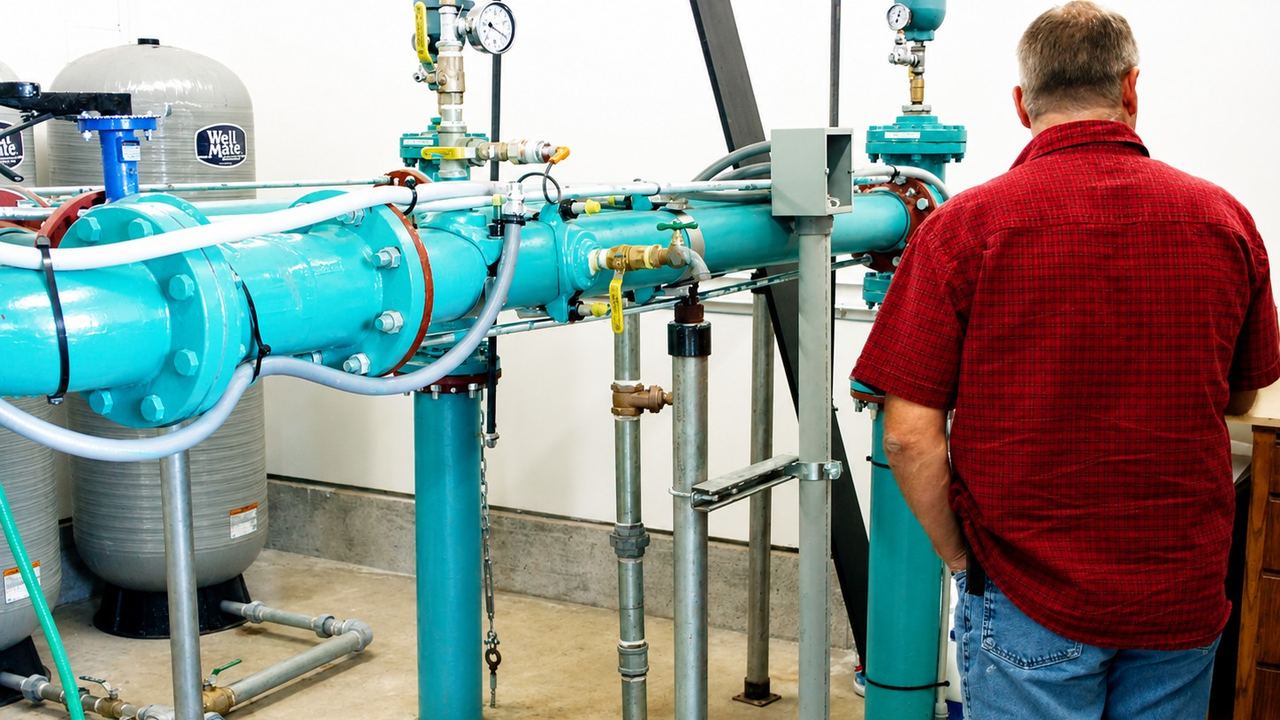
A cross-connection is any actual or potential link between the public water supply and a source of contamination. The contamination doesn't have to be reaching anyone right now for the risk to be real: the connection just has to exist for conditions that allow backflow to make it a problem.
For most small public water systems, cross-connection control gets less attention than it deserves. The issues tend to be invisible until something goes wrong.
How Backflow Happens
Water in a distribution system flows in the intended direction as long as system pressure is greater than the pressure at the service connection. Two conditions break that assumption.
Back-pressure occurs when pressure on the customer's side exceeds system pressure: this can happen with booster pumps, elevated tanks, or thermal expansion. Back-siphonage occurs when system pressure drops below atmospheric pressure, typically during a main break, high demand, or firefighting operations nearby. Either condition can draw contaminated water from a connected source back into the distribution system.
Common Cross-Connections in Small Systems
The most common cross-connections found during surveys of small public water systems:
- Garden hose connections: a hose submerged in a bucket, pond, or sprayer creates a direct cross-connection. Hose bib vacuum breakers are the fix and they're inexpensive.
- Irrigation systems: any in-ground irrigation system without an approved backflow preventer is a cross-connection.
- Boiler systems: commercial and industrial customers with chemical treatment in their boiler water are a high-hazard cross-connection risk.
- Chemical storage and mixing operations: any facility that mixes chemicals using a water connection.
- Medical and dental facilities: equipment that connects to the water supply and uses it in proximity to potential contaminants.
Your Cross-Connection Control Program
EPA and most state primacy agencies require community water systems to have a cross-connection control program. At minimum this includes identifying high-hazard service connections, requiring installation of approved backflow prevention assemblies at those connections, and maintaining a testing schedule for those devices.
Reduced pressure zone (RPZ) assemblies are the standard requirement for high-hazard connections. Double check valves are acceptable for lower-hazard connections in many states. Atmospheric vacuum breakers work for non-continuous pressure applications.
All mechanical backflow prevention devices require annual testing by a certified tester. Keep your test records. This is a sanitary survey item and a common finding when records are incomplete.
Customer Communication
Your customers generally don't know what a cross-connection is or that they might have one. Including a cross-connection awareness item in your CCR or a periodic customer newsletter reduces your risk and builds credibility as an operator who takes public health seriously.
Need expert help with your water system?
Water Operator Hotline connects small public water systems with experienced water utility professionals who can help you stay compliant, maintain your equipment, and solve problems fast.