WOH Chemical Concentrations Reference
Reference table of concentration and specific gravity values for common drinking water treatment chemicals, plus unit conversions and dosage calculation methods needed for accurate chemical feed pump sizing and day tank management.
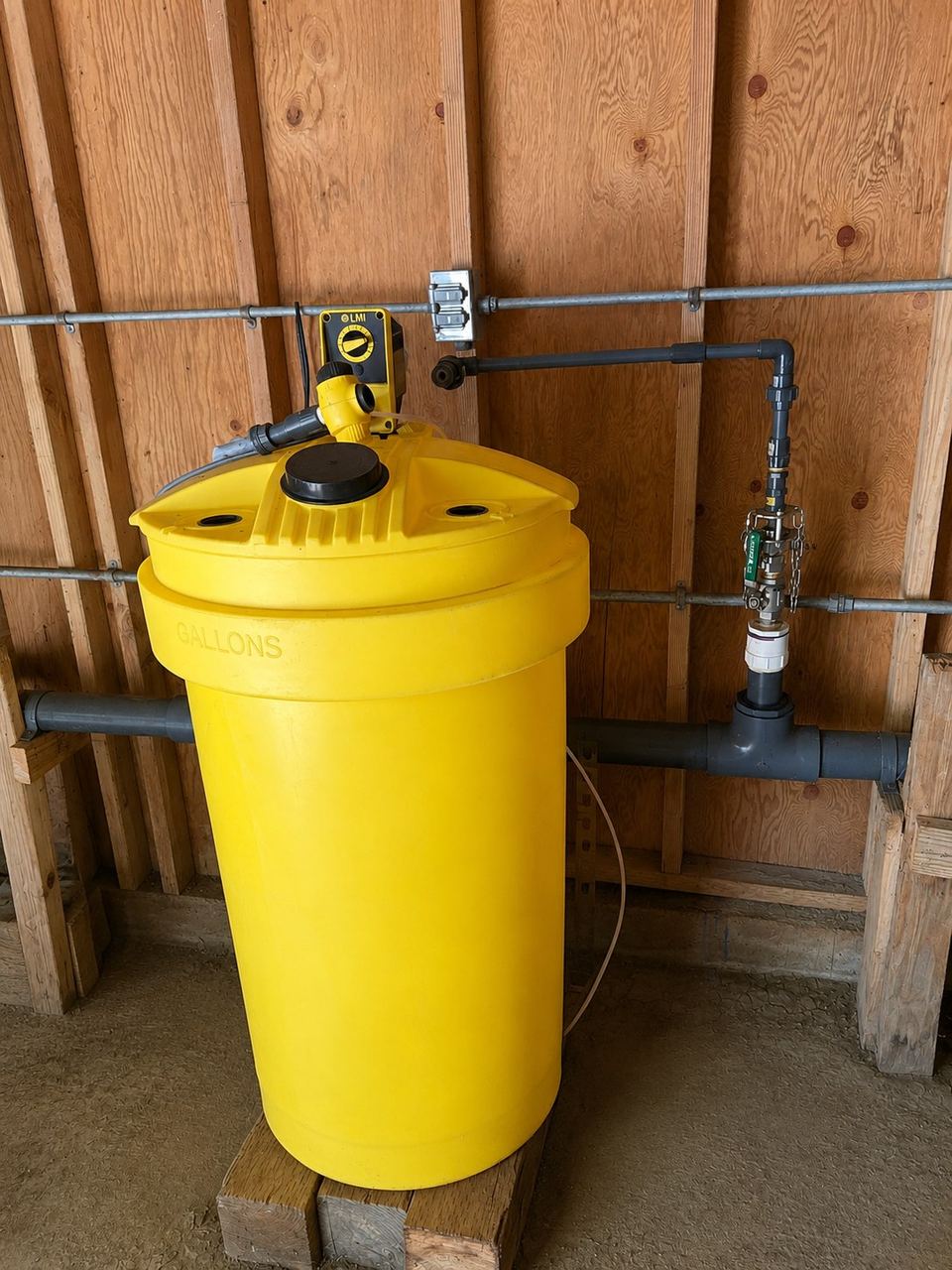
This guide consolidates concentration and specific gravity (S.G.) data for chemicals routinely used in drinking water treatment: sodium hypochlorite, alum, ferric chloride, ferric sulfate, sodium permanganate, sodium hydroxide, and ammonium sulfate. Specific gravity is the ratio of solution density to pure water and is essential for converting between volume-based pump settings (GPD or mL/min) and mass-based dosage targets (lb/day or mg/L). Always verify values against the current Safety Data Sheet or supplier certificate of analysis before performing compliance-critical calculations.
Key unit conversions are provided: 1 gallon = 8.34 lb (water at 60°F), 1 mg/L = 1 ppm, and % concentration × 10,000 = mg/L. To find chemical weight from volume, multiply gallons × 8.34 × S.G. × concentration (decimal). To find required pump volume from a dosage target, divide the chemical dose by (8.34 × S.G. × concentration).
Several chemicals vary in form or concentration by supplier. Sodium hypochlorite degrades over 30–60 days in storage and should be verified by certificate of analysis, not label. Ferric chloride comes in 35% and 42% grades with different specific gravities; switching grades requires recalibration. Sodium hydroxide (50% grade) is viscous and may need heat tracing in cold climates. Aluminum sulfate concentration and form vary by supplier. Always consult your state primacy agency and design engineer before implementing chloramine disinfection systems.
Source document
WOH_Chemical_Concentrations_Reference.pdf
application/pdf · 29.8 KB
Become a member to view the full 5 min readMore with similar tags
How to Prepare for a Sanitary Survey
Sanitary surveys happen on a defined schedule: every three to five years for most community water systems, every five years for groundwater systems that meet certain criteria. You know they're…
3 min read
Consumer Confidence Reports: What Your Customers Actually Want to Know
Your CCR is a legal requirement. It's also your best opportunity to build trust with the people who drink your water. Here's how to write one that does both.
3 min readNeed expert help with your water system?
Water Operator Hotline connects small public water systems with experienced water utility professionals who can help you stay compliant, maintain your equipment, and solve problems fast.