WOH Diaphragm Metering Pump Guide
Diaphragm metering pumps deliver precise, repeatable chemical doses by using a flexible diaphragm to isolate chemical from the motor. This guide covers operation, calibration, maintenance, and troubleshooting for drinking water system operators.
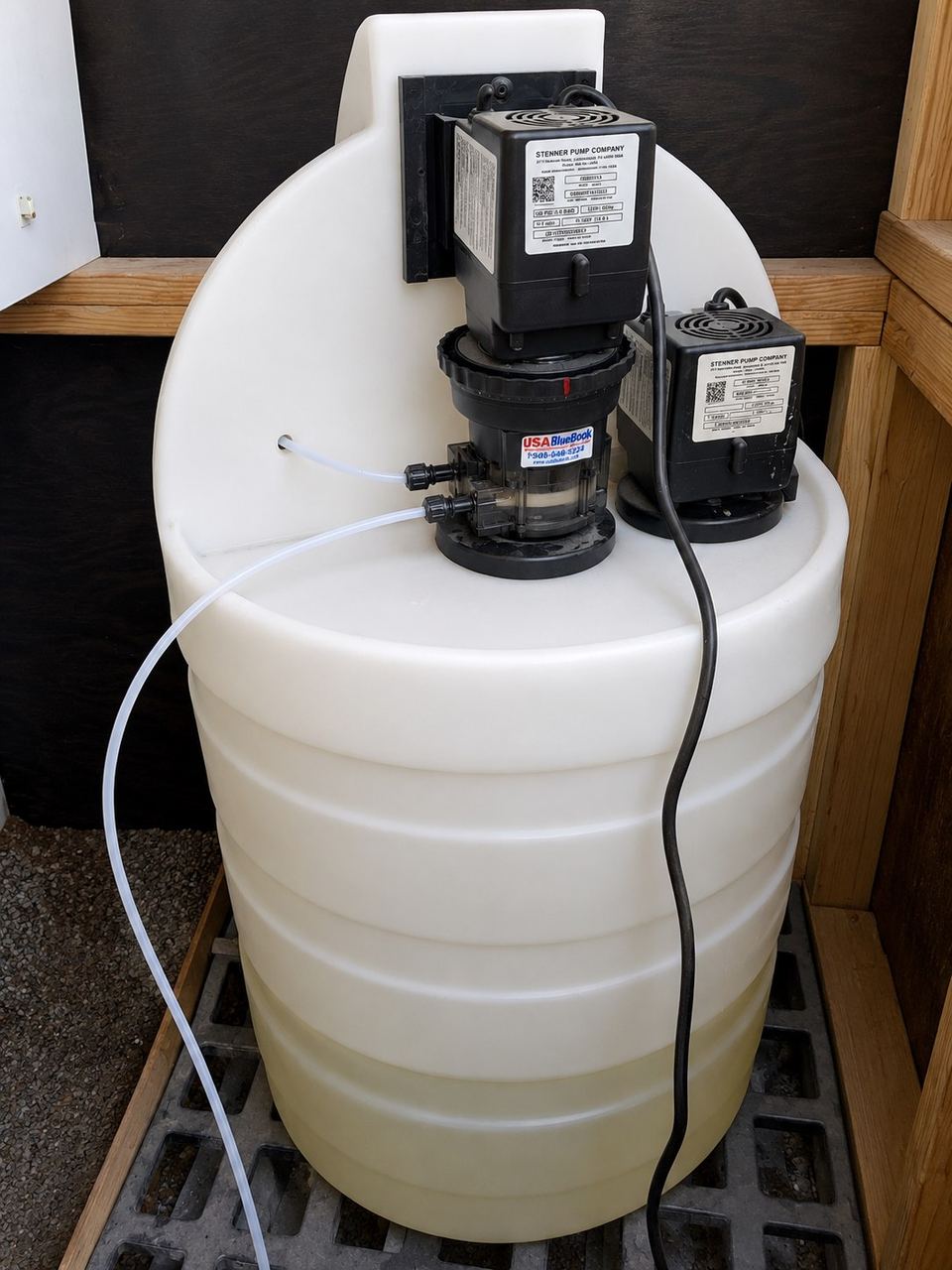
A diaphragm metering pump is a positive-displacement device where an electric motor drives an eccentric cam or solenoid to move a flexible diaphragm back and forth. Each back-stroke draws chemical into the pump head through a suction check valve; each forward stroke pushes it out through a discharge check valve to the injection point. The diaphragm—usually PTFE or PTFE-coated—physically separates the chemical from the drive mechanism, making these pumps the standard for chlorine dosing in small drinking water systems.
Key components that require attention are the suction and discharge check valves (worn or fouled valves cause low or erratic output), the diaphragm (cracks or fatigue cause loss of output and leakage), the pump head (must be compatible with the chemical being dosed), and the injection quill and check valve at the point of entry (a broken quill or failed valve results in zero delivery). The foot valve and suction strainer at the day tank bottom must be kept clean to maintain prime and prevent particulates from entering the pump head.
Unlike centrifugal pumps, a diaphragm metering pump delivers approximately the same volume per stroke regardless of system pressure—within its rated pressure range. However, if discharge pressure exceeds the pump's maximum rating, output will drop and the pump may stall; always verify the pump's pressure rating exceeds the static pressure at the injection point.
During installation, mount the pump at or below the day tank level to prevent air-lock, use only manufacturer-specified tubing material, keep suction lines short and direct, verify all wetted parts are compatible with the chemical and its concentration, and prime the pump before first use. Never run the pump dry, as this damages the diaphragm and check valves.
Source document
WOH_Diaphragm_Metering_Pump_Guide.pdf
application/pdf · 55.1 KB
Become a member to view the full 23 min readMore with similar tags

Storage Tank Inspection: What to Look For and When to Act
Your storage tanks are one of the most vulnerable points in your distribution system. A systematic inspection approach catches problems before they become violations.
2 min read
Well Pump Troubleshooting for Small Water Systems
A pump that won't start, won't keep pressure, or runs constantly is telling you something. Here's a systematic approach to diagnosing the most common well pump problems.
3 min readNeed expert help with your water system?
Water Operator Hotline connects small public water systems with experienced water utility professionals who can help you stay compliant, maintain your equipment, and solve problems fast.