WOH Gravity Tank Guide
Gravity tanks store treated water at elevation to create system pressure naturally—about 0.43 psi per foot of height. This guide covers tank components, level control setpoints, maintenance schedules, and troubleshooting for operators.
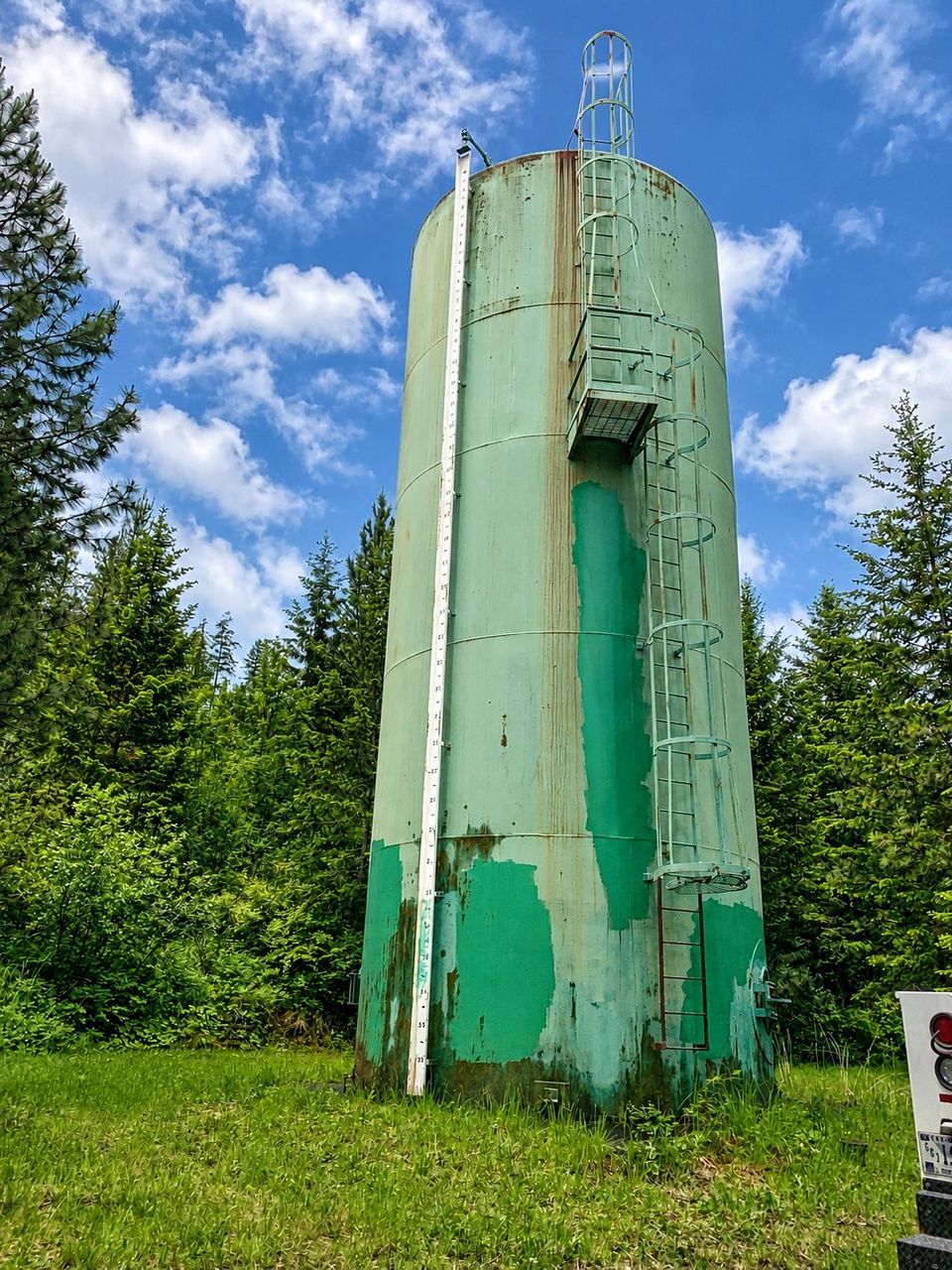
A gravity storage tank relies on elevation alone to generate pressure for the distribution system, with no pump or compressor needed at the tank. Every foot of height above the service area provides approximately 0.43 psi; a tank 100 feet elevated delivers roughly 43 psi at ground level. The pump fills the tank from a source (well, treatment plant, or booster station) until a float valve, solenoid valve, or level-controlled shutoff stops the flow at the high-water setpoint. As customers use water, the level drops until it reaches the pump start setpoint, triggering a refill cycle. The tank serves three critical functions: storage for peak demand periods, emergency reserves, and fire flow supply.
Tank shells are typically welded or bolted steel, concrete, or fiberglass, each with distinct durability concerns. Steel tanks are most common and require protective coatings, cathodic protection (sacrificial or impressed-current anodes), and regular inspection to combat internal and external corrosion. Concrete tanks must be monitored for crack growth, carbonation, and rebar corrosion. All inlet valves, outlet pipes, overflow discharge paths, and drain valves must function reliably; a stuck-open inlet causes overflow, while a stuck-closed inlet prevents the tank from refilling and can leave the system without adequate pressure.
Critical components include the overflow pipe (screened, discharge visible, set at maximum allowable level), vent openings (screened against insects and rodents, kept clear of blockages), and the access hatch (locked, sealed, with solid gasket). Level sensors—float-and-cable, pressure transducers, ultrasonic, or radar transmitters—must be calibrated annually; inaccurate readings cause incorrect pump cycling and overflow risk. Level control setpoints must maintain minimum pressure (typically 20 psi during fire flow, 35–45 psi normal demand) at the highest service connection; allowing the tank to drain too low can cause system-wide pressure failures and backflow hazards.
Routine maintenance includes exercising drain valves annually, inspecting and cleaning vent screens, verifying hatch seals and locks, and checking the security fence and gate for signs of tampering or unauthorized entry. Any continuous overflow is a critical warning sign of inlet valve failure. Documentation of setpoints and any changes to system demand or source capacity must be recorded in the operations file.
Source document
WOH_Gravity_Tank_Guide.pdf
application/pdf · 68.2 KB
Become a member to view the full 34 min readMore with similar tags

Storage Tank Inspection: What to Look For and When to Act
Your storage tanks are one of the most vulnerable points in your distribution system. A systematic inspection approach catches problems before they become violations.
2 min read
Well Pump Troubleshooting for Small Water Systems
A pump that won't start, won't keep pressure, or runs constantly is telling you something. Here's a systematic approach to diagnosing the most common well pump problems.
3 min readNeed expert help with your water system?
Water Operator Hotline connects small public water systems with experienced water utility professionals who can help you stay compliant, maintain your equipment, and solve problems fast.