WOH Peristaltic Pump Guide
Peristaltic pumps meter chemical by squeezing a flexible tube with rotating rollers. This guide covers operation, tube selection, calibration, maintenance, and troubleshooting for drinking water operators.
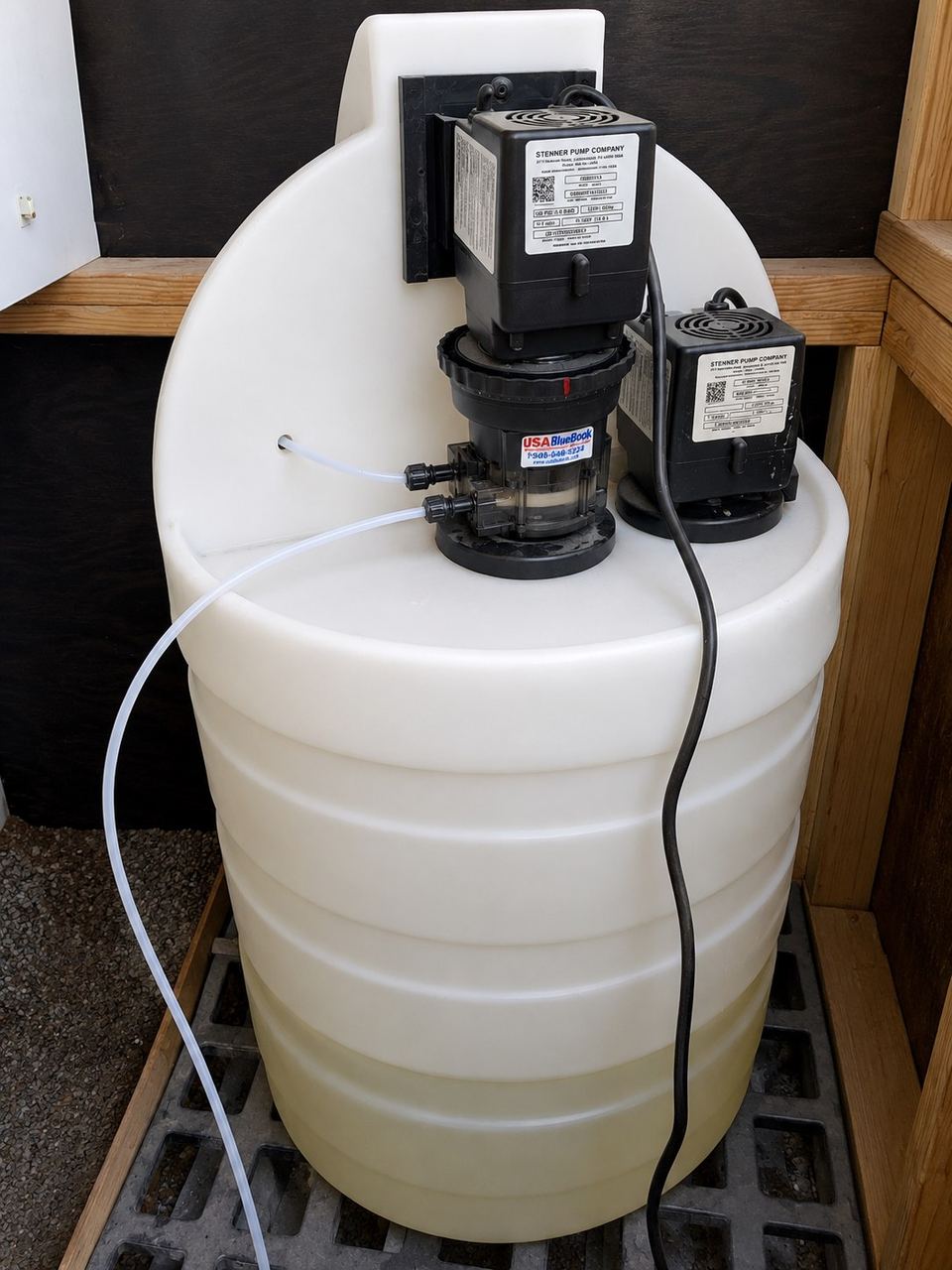
A peristaltic pump moves fluid by progressively compressing a flexible tube against a housing using rotating rollers. As each roller passes, it creates a sealed pocket that advances the fluid toward discharge; when the roller lifts, the tube springs back and draws in more chemical. The pump tube is the only wetted component, making peristaltic pumps simpler to maintain than diaphragm pumps because no valves, seals, or pump heads contact the chemical.
Key components include the motor (controlling rotor speed via dial or external signal), the rotor with two to four equally-spaced rollers, and the pump tube itself—a consumable that wears from repeated compression and must be replaced on schedule regardless of appearance. The housing contains any leaks, and an injection check valve prevents backflow from system pressure. Suction tubing must remain free of kinks and leaks to maintain prime, and discharge tubing should be kept short; a back-pressure valve may be needed if injection-point pressure is low.
Tube material selection is critical—the wrong material degrades rapidly and can fail without warning. Common options include PVC (for dilute acids and bases), Norprene/Tygon S3 (for sodium hypochlorite up to ~12.5%), Marprene/Bioprene (for most water treatment chemicals with extended life), and PTFE-lined (for broad chemical resistance including strong oxidizers). Always verify compatibility with the pump manufacturer and your specific chemical concentration and temperature before installation.
Peristaltic pumps excel at self-priming, handle viscous or particle-laden chemicals well, and are well-suited for remote or minimally-staffed systems. Output does drop more with increasing back-pressure compared to diaphragm pumps, and flow pulsation is more noticeable—especially with two-roller designs. Tube replacement is the primary maintenance task and typically takes minutes with no special tools.
Source document
WOH_Peristaltic_Pump_Guide.pdf
application/pdf · 62.7 KB
Become a member to view the full 28 min readMore with similar tags

Storage Tank Inspection: What to Look For and When to Act
Your storage tanks are one of the most vulnerable points in your distribution system. A systematic inspection approach catches problems before they become violations.
2 min read
Well Pump Troubleshooting for Small Water Systems
A pump that won't start, won't keep pressure, or runs constantly is telling you something. Here's a systematic approach to diagnosing the most common well pump problems.
3 min readNeed expert help with your water system?
Water Operator Hotline connects small public water systems with experienced water utility professionals who can help you stay compliant, maintain your equipment, and solve problems fast.